
Ol Kalou Elected a New MP: UDA’s Defeat and a Signal for Ruto Ahead of 2027
 Jeffery Pookie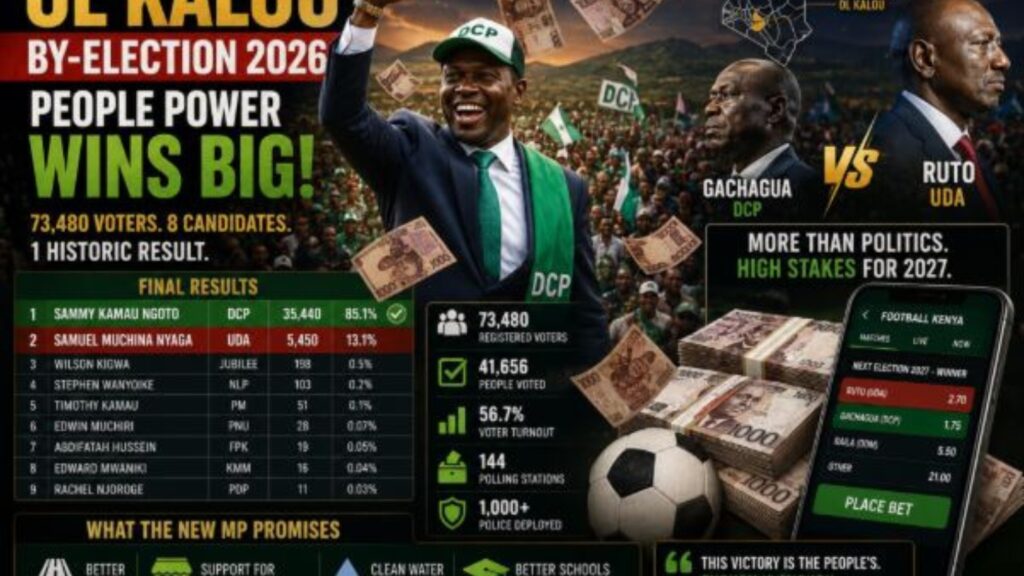
Ol Kalou greeted the dawn not with hot tea, but with long queues at polling stations. It was cold outside – mornings in Nyandarua are always chilly. But people came. Some with thermoses, some with children in their arms, some simply with hope.
73,480 registered voters. 144 polling stations. 8 candidates. One parliamentary seat.
And the stakes in this political lottery were higher than on any football betting site in the country. Because this wasn’t just about an MP. It was about who controls the votes of central Kenya. And when the results were announced the next day, political Kenya gasped.
Why Ol Kalou Became the Centre of Attention
The seat became vacant after the death of MP David Kiaraho.
He passed away on 29 March 2026 at a Nairobi hospital. Since then, Ol Kalou had become the country’s main political stage.
Why this constituency?
First, it lies in Nyandarua – at the heart of the Mount Kenya region. This is one of the most populous and politically significant areas in Kenya.
Second, it brought together the country’s two main political forces: President William Ruto and his former ally Rigathi Gachagua. Their split after the 2022 elections divided the region. And Ol Kalou became the first major battle on this new political map.
Who Was Running for the Seat
Eight candidates submitted their applications. But the real contest came down to a duel between two parties.
Main contenders:
- Sammy Kamau Ngoto (DCP) – opposition, backed by Gachagua
- Samuel Muchina Nyaga (UDA) – ruling party, backed by Ruto
Other candidates:
- Wilson Kigwa (Jubilee) – former ruling party
- Stephen Wanyoike (NLP) – minor party
- Timothy Kamau (PM) – minor party
- Edwin Muchiri (PNU) – minor party
- Edward Mwaniki (KMM) – minor party
- Abdifatah Hussein (FPK) – minor party
- Rachel Njoroge (PDP) – minor party
Behind the scenes stood two giant figures. Ruto and Gachagua. Their rivalry turned a local election into a national event.
How Voting Day Unfolded
Voters began arriving at polling stations at 5 AM. By 6 AM, when the doors opened, queues were already long.
Key numbers:
- Registered voters: 73,480
- Total polling stations: 144
- Voter turnout: 41,656 people
- Turnout percentage: 56.7%
For a by‑election, this was exceptionally high.
Security:
- Over 1,000 police officers were deployed across the constituency
- Each polling station had at least two officers
- In Ol Kalou town, armed men in masks attacked journalists
- Tear gas was used in some areas
Irregularities:
- Human rights groups reported:
- Voter bribery
- Attempts to buy ID cards
- Isolated cases of intimidation
Despite this, IEBC described the process as “peaceful and orderly.”
The Results: A Defeat No One Expected
When all the votes were counted, the picture was devastating.
Full results table:
| Candidate | Party | Votes | % |
| Sammy Kamau Ngoto | DCP | 35,440 | 85.1% |
| Samuel Muchina Nyaga | UDA | 5,450 | 13.1% |
| Wilson Kigwa | Jubilee | 198 | 0.5% |
| Stephen Wanyoike | NLP | 103 | 0.2% |
| Timothy Kamau | PM | 51 | 0.1% |
| Edwin Muchiri | PNU | 28 | 0.07% |
| Abdifatah Hussein | FPK | 19 | 0.05% |
| Edward Mwaniki | KMM | 16 | 0.04% |
| Rachel Njoroge | PDP | 11 | 0.03% |
DCP won with a margin of almost 30,000 votes.
Three candidates didn’t even reach 20 votes. This wasn’t just a loss for UDA – it was a political knockout.
What the Winners Said
Sammy Kamau Ngoto, after the results were announced, didn’t hide his emotions:
“This victory is not mine. It is the victory of the people of Ol Kalou, who said ‘enough’. We have shown that the people’s voice is stronger than money and machines.”
Gachagua, who personally came to Ol Kalou the next day, declared Nyandarua the DCP headquarters. A symbolic gesture that cemented the victory.
He said: “What we saw in Ol Kalou is the beginning of the end. People are tired of promises without results.”
What the Losers Said
Samuel Muchina, the UDA candidate, conceded defeat:
“We accept the will of the people. I congratulate my opponent. We will analyse what went wrong.”
President Ruto has not publicly commented on the result.
But behind the scenes, it is said that State House took this result as a wake‑up call.
One official in Ruto’s administration said on condition of anonymity: “We underestimated the people’s anger. This was a lesson.”
What This Means for Kenya
Ol Kalou is a small constituency in Nyandarua. But its election became a barometer for the entire country.
Five conclusions from this result:
- Mount Kenya is turning away from Ruto. The region that delivered the president’s victory in 2022 is now turning its back on him.
- UDA is losing its strongholds. For the ruling party, this is one of the heaviest by‑election defeats in recent years.
- DCP is becoming a real force. Gachagua’s opposition party didn’t just win a parliamentary seat – it received a mandate of confidence from an entire region.
- 2027 will be hot. These elections are a warning for Ruto. If he loses Mount Kenya, his re‑election chances drop sharply.
- Economy vs politics. Many analysts link the result to the difficult economic situation. People weren’t voting for Gachagua – they were voting against Ruto.

Comparison with Other By‑elections
To understand the scale, let’s look at history.
| By‑election | Year | Constituency | Winner | Margin |
| Ol Kalou | 2026 | Nyandarua | DCP | +30,000 |
| Kitui West | 2025 | Kitui | UDA | +2,100 |
| Kandonda | 2024 | Mumbi‑West | UDA | +1,800 |
| Bombet | 2023 | Bomet | UDA | +4,500 |
In Ol Kalou, the margin was seven times larger than in Kitui West. This isn’t just a victory. It’s an earthquake.
Why This Matters for 2027
Analysts are already calling this election a “referendum before the referendum.”
Here’s what political commentator Herman Manyora says:
“Ol Kalou has shown that Mount Kenya is no longer a UDA stronghold. This is a serious signal for the president. If he doesn’t find a way to regain the region’s trust, 2027 will be very difficult for him.”
Election expert George Wajackoyah adds:
“This is the beginning of the end for Ruto’s political machine in central Kenya. Gachagua now has proof – his people are with him.”
What’s Next
New MP Sammy Kamau Ngoto has already stated his priorities:
- Improving roads in the constituency
- Supporting small businesses
- Access to clean water
- Developing school infrastructure
In parliament, he will join the DCP opposition faction. This will increase pressure on the government on key budget and policy issues.
And for Ruto, the countdown begins. There’s just over a year until 2027. And Ol Kalou has shown: time is not on his side.
Ol Kalou has voted. The score – 35,440 against 5,450. Kenya’s political map has changed.
And now the whole country is watching 2027. Because if Mount Kenya has turned away from Ruto – what will stop the rest?
Do you think Ruto can win back Mount Kenya before 2027? Or is this the beginning of the end of his presidency? Let us know in the comments.
FAQ
1. When did the Ol Kalou by‑election take place?
Voting took place on 16 July 2026.
2. How many people voted?
The constituency has 73,480 registered voters. 41,656 people voted – a turnout of 56.7%.
3. Who won?
Sammy Kamau Ngoto of the DCP party received 35,440 votes (85.1%).
4. Why are these elections so important?
They are considered the first major political test in the Mount Kenya region after the split between Ruto and Gachagua. The result shows the region is turning away from the ruling party.
5. Were there any irregularities?
Yes. There were reports of voter bribery, attempts to buy ID cards, and isolated cases of violence.
6. What does this mean for the 2027 elections?
Experts believe this is a serious signal for Ruto. Losing Mount Kenya puts his re‑election in question.