 Gregory Legere
Dani K. | Gaming and iGaming writer, 6 years covering indie games and online casino formats. Tested June 2026.
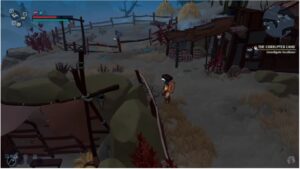
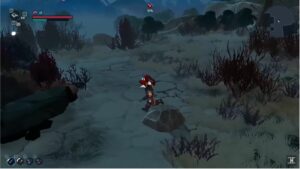
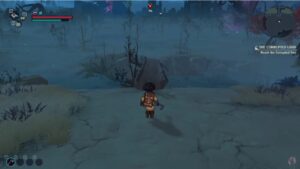
You know that specific kind of dread. You're twelve minutes into a Serpent Rogue run. Your alchemy bench is stocked, your reputation with the Hunters is solid, and you've got a plan. Then you push one beat too far into a fog zone and the whole thing collapses. Run over. Back to zero. The moment that ends you is never the first risky decision. It's the one where you knew you should have stopped but didn't.
That psychological loop. Hold on for one more multiplier, or cash out now before the crash. Has migrated almost perfectly into casino game design. The format is called crash, and it runs on exactly the same instinct. If you want to see what that looks like across different platforms, crash casino games are reviewed in detail by Nicholas White over at Passionfru.it, including which operators actually pay out fast and which ones freeze your winnings behind a 30-day KYC wall.
But the reason crash games feel so immediately readable to anyone who's sunk time into roguelites is worth unpacking properly.
The Run Structure Is Identical
Game Developer published a breakdown of roguelike design fundamentals that makes one thing clear: the genre's entire psychological engine runs on what designers call the "risk/reward cycle within a bounded session." Each run is a fresh start. Each decision compounds. One bad call ends everything. The tension isn't "can I win". It's "have I already won enough to justify stopping."
Crash games are a direct port of that structure into gambling. A round starts at 1.00x and a multiplier climbs. 1.5x, 2.3x, 4.1x, sometimes into double digits. You can cash out at any point. But if you're still in when the crash hits (and it always hits eventually), you lose your stake entirely. No partial credit. No second chance. The round resets.
The session structure is almost embarrassingly similar to a roguelite run. Short. Self-contained. High-variance. The reason you queue up for another round immediately after a loss is the same reason you hit "new run" in Hades at 1am: the previous session's data feels like something you can now use.
The Decision Window Is the Game
In The Serpent Rogue, the actual moment of challenge is rarely the combat. It's the point where you're debating whether to backtrack to safety or press deeper into territory you haven't mapped. The game is making you price risk in real time with incomplete information.
Crash works identically. You don't know when the crash will happen. The RNG is resolved server-side before the round begins (provably fair implementations let you verify this after the fact with a seed hash). What you're actually doing is making a decision about your own risk tolerance against a rising number, with no new information arriving to help you.
Neuroscience research published in Nature Neurosciencevia PMC found that uncertainty-bounded decisions. Where the outcome is unknown but the potential gain increases with delay. Activate the same dopamine pathways as reward receipt itself. The anticipation is the hit. Both roguelite runs and crash rounds are built almost entirely on that mechanism.
This is why Aviator, which Spribe launched in 2019, now reportedly has over 77 million monthly active users. That's a bigger active player count than most live-service games you're probably playing right now. The format works because it's targeting an instinct that gaming has spent 30 years training into players.
Where the Analogy Breaks Down (Honestly)
Here's where I'll give you the friction rather than the sales pitch.
In a roguelite, a bad run costs you time. In crash, it costs you money. That's not a small distinction. The psychological loop is similar, but the stakes are genuinely different, and the feedback loop in gambling is deliberately tighter than in games. Rounds last 20 to 60 seconds, compared to a 30-minute run in The Serpent Rogue. That compression is intentional. Faster rounds means faster reset, means less time to decide you're done for the session.
I've also seen the auto-cashout feature used in a way that mirrors the worst roguelite habit: setting it too low because you're scared, then watching five consecutive rounds crash above your threshold, then disabling it entirely. That sequence is how you end up in a hole. The feature is good. Use it and don't move it mid-session.
The other thing worth naming: not all crash games use verifiable provably fair RNG. Some of the shadier operators run proprietary multiplier algorithms with no external audit. If you can't check the seed hash after a round, you're playing on trust alone. That's not acceptable. Stick to platforms where the provably fair documentation is actually accessible, not just claimed in an FAQ.
For a broader look at how online casino payment systems and withdrawal mechanics work across formats, the guide to convenient payment systems for casino players on this site covers the withdrawal mechanics worth understanding before you deposit anywhere.
The Meta-Game Is Risk Calibration
Players who survive long-term in crash. Not just lucky sessions but consistent, sustainable play. Treat it like a roguelite meta. They're not trying to hit 10x every round. They're managing expected value across a session budget.
The approach that holds up: pick a cashout target before the round starts and don't move it. 1.5x or 2x consistently beats chasing 5x with no discipline. Set a session loss limit before you open the client, not after your third bad round. Treat auto-cashout as your build. It's not a crutch, it's execution.
The roguelite design analysis from Game Developer identifies one of the genre's canonical rules as "strategic choices that persist across runs". Meaning the knowledge and habits you build carry over even when the run resets. That's exactly what disciplined crash play looks like. The session resets. Your calibration shouldn't.
FAQ
What actually is a crash game? A crash game is a casino format where a multiplier climbs from 1.00x after each round starts. You cash out manually at any point to lock in your multiplier times your stake. If you're still holding when the crash hits. Which is RNG-determined before the round begins. You lose your full bet. Rounds typically last 20 to 60 seconds.
Are crash games provably fair? The legitimate ones are. Provably fair implementations publish a server seed hash before each round, then reveal the full seed after, so you can independently verify the crash point wasn't manipulated. If a platform doesn't offer seed verification, that's a serious red flag worth treating as a dealbreaker.
Is auto-cashout a good strategy in crash games? Yes, with discipline. Setting an auto-cashout at 1.5x or 2x before the round starts removes emotional decision-making from the equation. The trap is adjusting it mid-session because recent rounds "felt" like they were going higher. Set it, leave it, and stick to your session budget.
How are crash games different from slots? Slots are passive. You spin and the outcome is instant. Crash games have an active decision point in every single round: cash out now or wait. That's what makes them structurally closer to skill-adjacent formats. The RNG governs when the crash happens, but timing your exit is entirely on you.
What should I look for in a crash gambling platform? Three non-negotiables: fast verified payouts (not "processing" for a week), confirmed provably fair RNG with accessible seed verification, and a withdrawal process that doesn't require a 30-day KYC freeze after your first win. Licensing jurisdiction matters too. MGA and Curaçao eGaming are the relevant frameworks for most English-speaking players.
The Instinct Transfers. But Know What You're Walking Into
The Serpent Rogue taught you something useful: knowing when to commit and when to pull back is the actual game, and overconfidence kills runs faster than anything else. That instinct is genuinely transferable to crash. The format rewards players who treat each session as a bounded risk problem, not a chase.
But games don't cost money when you die. Crash does. If you're going to try it, go in with a session budget you've already decided to lose entirely if the variance goes wrong, because sometimes it will. And if gambling starts to feel like something you're doing to fix a problem rather than for entertainment, stop and visit BeGambleAware.org or call the National Problem Gambling Helpline at 1-800-522-4700.
Gambling involves real financial risk. Only wager what you can genuinely afford to lose.