
 Elyum Jniye

Editorial illustration: review account details and conditions rather than assuming a reward is guaranteed.
Game reward mechanics and betting bonuses can both feature chance, progress and incentives, but one crucial distinction is the possibility of losing real money. Fantasy games routinely reward exploration with materials or achievements; wagering promotions operate under financial and legal conditions. For a look at a registration-bonus information resource, see https://888starz-registration-bonus.co.ke/. This article treats guide pages and operators as distinct; readers should verify the identity of any provider independently and never assume a third-party address is official.
Random drops are not the same as real-money payouts
In many video games, an item drop changes character progression without creating an expectation of money. A sportsbook selection or a casino event, by contrast, can produce a financial loss. The emotional experience of surprise may be similar, yet the underlying terms are not. Describing a bonus as a prize risks obscuring requirements such as eligible odds, bonus expiry or identity verification. Read product rules according to the type of value at stake, rather than assuming familiarity with game mechanics makes the financial risk manageable.
Understand randomness and expected value
A successful event in a random system does not imply that the next event is due to repeat or reverse. A player who sees several losses may feel the system is about to compensate them, but independent outcomes do not remember previous results. In betting, implied probabilities and operator margins also affect whether a selection is attractively priced. A promotion may change an individual transaction’s terms, yet it cannot guarantee a profitable sequence. A disciplined approach separates entertainment value from financial expectation.
A practical question to ask
What evidence would allow a careful reader to verify this detail without relying only on promotional language? Look for a dated rule, a specific operator policy, a reputable explanation of the market, or a response from an authenticated support channel. Where evidence is unavailable, describe the uncertainty instead of inventing a precise promise.
Treat bonus criteria like a quest log with exceptions
A quest may ask the player to complete specific steps, but a real-money offer can specify eligible markets, minimum odds, deposit rules and settlement periods. An attractive progress meter hides details if it omits excluded activities or the point when a bonus expires. Write a plain-language checklist before participating: what qualifies, what does not, how progress is measured and where official clarification can be obtained. Do not respond to a confusing requirement by increasing stakes simply to test the system.
Watch out for unofficial guides and lookalike pages
Fan communities are useful for tactics and reviews, but links shared in a forum are not proof that a page belongs to an operator. Compare the exact hostname with the platform’s verified channels and look for clear privacy information before entering credentials. Malicious copies can imitate game graphics, login screens and promotional banners. Unique passwords and multifactor authentication help, but the most important safeguard is to avoid entering private information on a site whose identity is unresolved.
Design a sensible stopping point
In a story-driven game, an additional attempt may simply cost time. In real-money entertainment, chasing an outcome can affect a personal budget. Set a maximum spend and session duration before engaging. Recognize that small wins and highly visible reward effects can encourage continued play even after a planned endpoint. Use reality checks, cooling-off periods and self-exclusion features if required. The objective is to maintain agency over the decision, not to complete every available promotional challenge.
An offer comparison framework beyond the headline
Write each offer into the same worksheet: territory, eligible customer, deposit condition, reward type, multiplier, permitted markets, minimum odds, maximum stake, expiry date, withdrawal restrictions and support contact. Missing information is itself a finding. A small credit with transparent conditions may be easier to evaluate than a large promotion with narrow eligibility. Check whether bets placed before opt-in count, whether void events contribute and what happens if the deadline passes. If the operator cannot answer a specific rule in writing, do not assume the most favorable interpretation applies.
What implied probability can and cannot tell you
A decimal quote of 2.50 has a simple implied probability of 1 / 2.50, or 40%, before accounting for the bookmaker’s margin. A quote of 1.50 corresponds to about 66.7% on the same basic calculation. These are price translations, not independently verified predictions. The market may have changed since a preview was published, and the same match can carry different prices at different providers. Anyone comparing analysis with a bet slip should check the event, settlement period and current price at the same time, not mix a stale forecast with a new market.
Why small wins can distort decision-making
Short streaks attract attention because they feel like proof of skill. Yet a few favorable outcomes can occur even when the underlying probabilities are poorly understood. Bonus badges and celebratory graphics can amplify that impression. Evaluate longer-term financial impact rather than anchoring on one success story, and keep a log of deposits, withdrawals and total time spent. Never describe betting as easy money. The purpose of learning market terminology is to make more informed choices about whether to participate, not to create confidence that outcomes can be controlled.
Quick reference table
|
Topic |
What to check |
Practical takeaway |
|
Reward source |
Publisher or operator identity |
Verify domain and ownership |
|
Progress |
What actions count and when |
A bar is not a payout guarantee |
|
Expiry |
Time window and exceptions |
Avoid countdown pressure |
|
Data collected |
Account and payment details |
Check privacy and security |
Checklist before making a decision
- Identify whether the reward is cosmetic, in-game currency or real-money related.
- Read eligibility, expiry, progression and withdrawal conditions without relying on animations.
- Inspect the verified publisher, hostname and app permissions before any sign-in.
- Protect separate gaming and financial accounts with different strong passwords.
- Ignore countdown pressure until you understand the complete written rules.
- Treat gambling as financial-risk entertainment, never as guaranteed income.
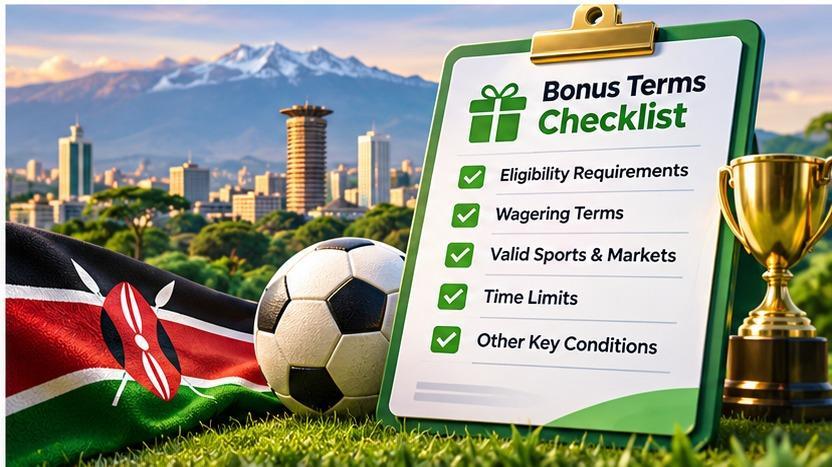
Visual checklist: follow the relevant steps and verify the written rules at each stage.
Frequently asked questions
Are video-game rewards and sportsbook bonuses interchangeable?
No. Non-cash in-game progress is different from a real-money promotion with financial, legal and eligibility conditions.
Does a full progress bar guarantee a payout?
No. The meaning of progress depends on the rules; conditions or restrictions may still apply, and wagering outcomes remain uncertain.
Can an unofficial gaming link be trusted because it looks polished?
No. Design and logos are easy to imitate. Verify the hostname and operator identity independently.
What is the safest response to a timed promotion?
Read the full conditions away from the countdown and decide whether participation fits your planned budget. Choosing not to participate is always an option.
Final perspective
A good guide should make it easier to ask precise questions, not push readers toward an immediate deposit. Confirm the website and legal eligibility, understand any qualifying terms, and assess whether participation fits a pre-set leisure budget. If an important detail cannot be independently verified, stop and ask for clarification. No bonus, prediction, or registration shortcut can guarantee financial returns. Adults only, where lawful; gamble responsibly.
Editorial draft • 18+ • Gambling involves risk